
- Is the journey the only goal?
- Is the Bible just a collection of legends?
- Is Christianity outdated – or eternal?
- Why do over 2000 people each year still die for their Christian faith?
We all set out on the road. Some say the journey is the goal.
But without a destination, we often just go in circles – around ourselves. And if there’s no goal, why bother walking with honesty or love? Without a purpose, pleasure becomes the only compass.
But what if the goal is real – and waiting for you?
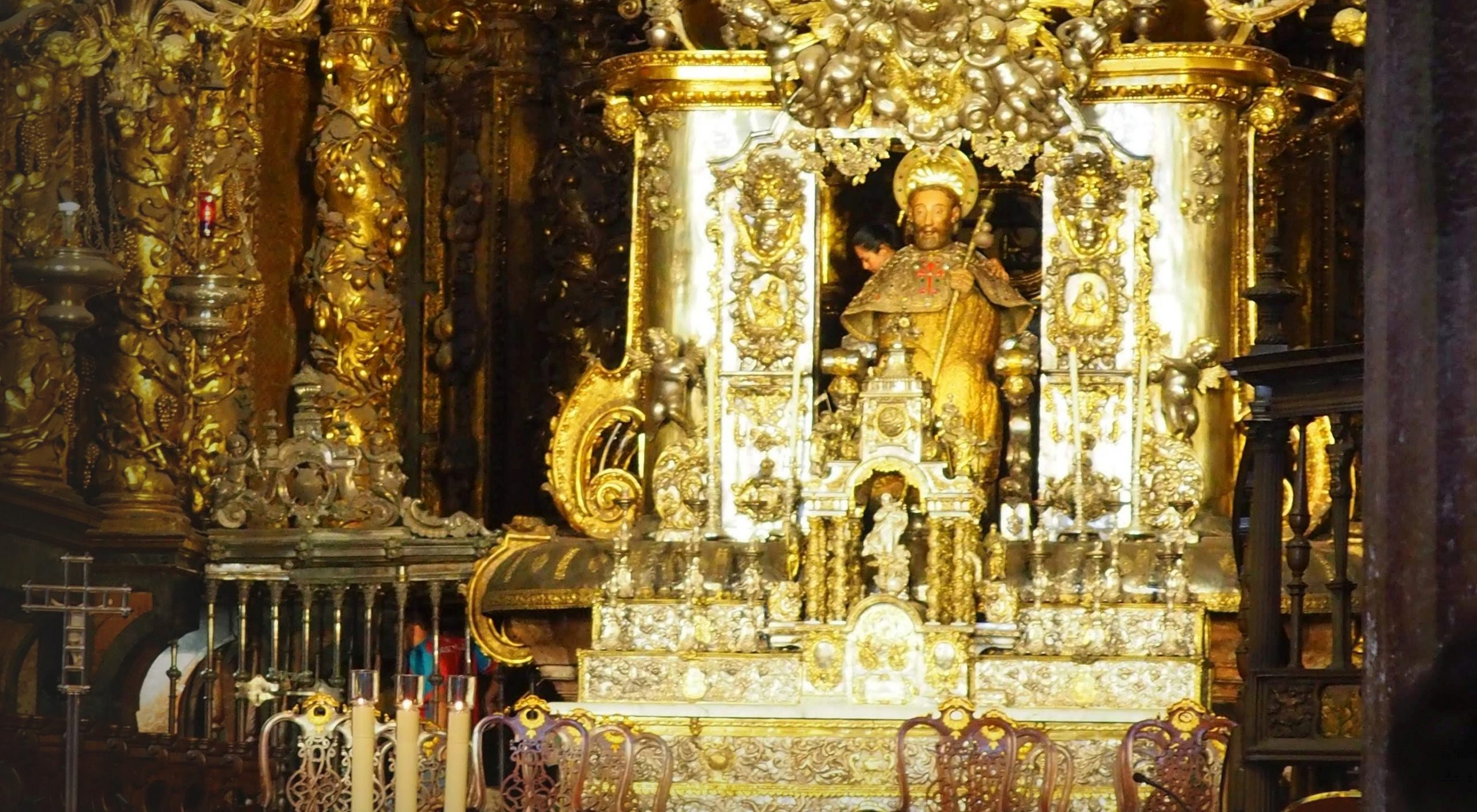
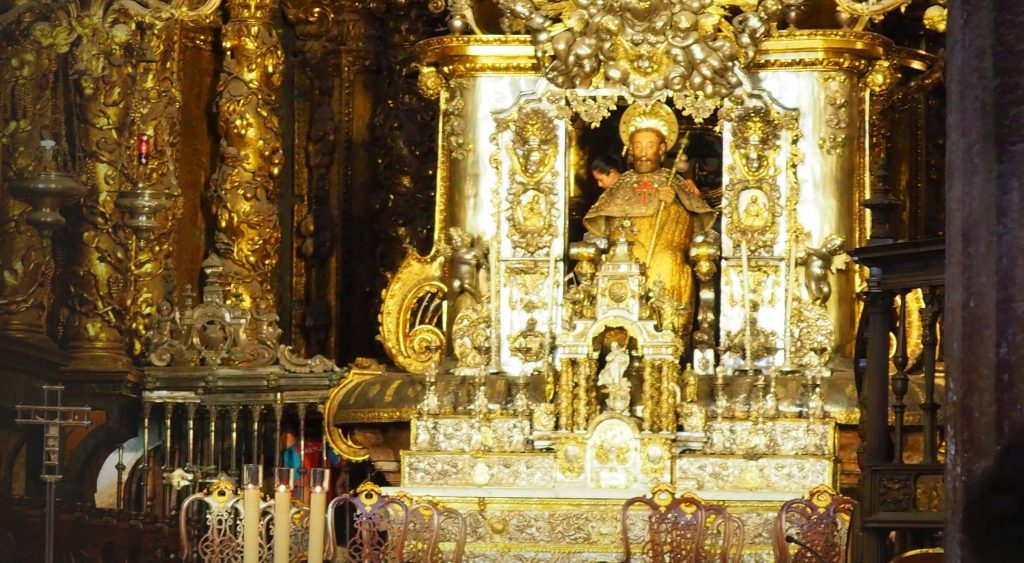
I want to visit a friend. More precisely, his grave.
I’ve never been there – though he died quite a long time ago. We weren’t close, but in many ways, we’re very alike. He was impulsive. So am I. He once earned the nickname “Son of Thunder” (Mark 3:17), probably for his temper. I think he would have understood my occasional confrontations with strong-headed people – especially within the Church.
Saint James the Greater, the son of Zebedee, is my favorite Apostle. Not because he was perfect – but because he was real. He was one of Jesus’ three closest companions, along with Peter and John. He was there on the Mount of Transfiguration (Matthew 17:1–2), when Christ revealed His divine glory – shining like the sun, speaking with Moses and Elijah. That should have been enough to fill him with unshakable faith. And yet… James was not at the foot of the Cross, when Jesus died. Only John stood there, with Mary. James, like the others, ran. I understand that. I, too, sometimes falter when it matters most. But James didn’t end in failure. He was the first Apostle to give his life for Christ (Acts 12:1–2).
He didn’t die for a metaphor or a moral code.
He died for what he had seen: the death and resurrection of Jesus – a real event, witnessed with his own eyes. He didn’t die for a story. He died for the Truth. And that Truth is not an idea, but a Person: Jesus Christ – God Himself.
Did Jesus really rise from the dead?
“If Christ has not been raised, our preaching is in vain – and so is our faith.”
That’s what Saint Paul wrote to the Corinthians (1 Cor 15:14). He made no attempt to soften the claim. Either it happened – or Christianity is false.
But can we believe it really happened?
Surprisingly, even many critical historians agree: something must have occurred. The tomb was empty. The disciples changed. The message spread – and nothing could stop it. So what makes the resurrection credible?
- The tomb was empty – and no one denied it.
Even the enemies of Jesus never claimed the body was still there. Instead, they invented the story that it was stolen (Matt 28:13) – an indirect admission that the tomb really was empty. - Women were the first witnesses.
In a world where women’s testimony was not legally valued, no one would have invented this detail. The Gospels report it anyway – because it’s what actually happened. - The apostles were transformed.
Before Easter: afraid, confused, in hiding.
After Easter: bold, unstoppable, willing to die.
What caused that change? Not a vague feeling – but a real encounter with the risen Lord. - They were willing to die for it.
People might die for a belief. But would anyone die for something they knew was a lie?
The Apostles had seen Jesus – alive, after death. They didn’t just believe. They knew. - Too many witnesses – too early.
Paul mentions over 500 people who saw Jesus alive (1 Cor 15:6) – and he writes this barely 20 years after the events. Most of them were still alive. You could go and ask them.
These are just a few of the reasons why the resurrection remains one of the best-documented events of antiquity. Not in the modern scientific sense – but in historical, legal, testimonial terms. Enough to convince a former atheist like Josh McDowell, who tried to disprove Christianity and ended up writing “Evidence That Demands a Verdict”.
The faith is not built on legends. It is built on a Person – and on what He did in real time and real history.
Is the Bible trustworthy – or just ancient religious propaganda?
We keep quoting the Bible. But how do we know it’s reliable?
Isn’t it just a collection of pious stories, written long after the fact, edited over centuries, and passed down with unknown changes?
Actually… no.
- The New Testament was written astonishingly early. The earliest letters of Paul were written around 20 years after Jesus’ death – that’s like someone today writing about 9/11. The Gospels were written within one generation, not centuries later. Too early for myths to take hold – and while eyewitnesses were still alive.
- The texts were copied and preserved with remarkable accuracy. We have over 5,000 Greek manuscripts of the New Testament – far more than any other ancient text. Compared to Homer, Plato, or Caesar, the New Testament is the best-preserved ancient book we have. And the differences between copies are mostly spelling or minor style – no doctrine has changed because of them.
- No one would invent this kind of story: The Apostles look foolish. Women are the first witnesses. Jesus dies in shame. The early Church struggles. If you wanted to invent a religion, this is not how you’d write it.
- The Old and New Testaments fit together. Prophecies written centuries before Jesus – like Isaiah 53 – describe His suffering in astonishing detail. The Bible is not one book, but a library written by many authors over 1,500 years – and yet it tells one coherent story. That’s either an accident beyond probability – or divine guidance.
The Bible is not just an ancient book. It is the testimony of those who saw, believed, and died for what they knew. It is not mythology. It is memory. And that memory has been guarded, lived, and proclaimed – through the Church, to this day.
Christians are still dying for their faith – today.
The age of martyrs is not over.
Every year, more than 2,000 Christians are killed for their faith. Not for politics. Not for power. Simply because they believe in Christ. According to the World Watch List 2024 by Open Doors, over 360 million Christians worldwide face high levels of persecution. Many are threatened, attacked, imprisoned – and some pay the ultimate price.
They don’t make headlines.
They don’t seek attention.
But their silent witness echoes what the Apostles once lived:
“We cannot but speak of what we have seen and heard.” (Acts 4:20)
They remind us: Christianity is not a Western tradition. It’s a global reality. And the Cross is not a symbol of the past. It is the path of the present.
Why am I Roman Catholic?
Because Jesus didn’t leave us a book — He left us a Church. He chose twelve Apostles, gave them authority, and said to Peter:
“You are Peter, and on this rock I will build my Church. I will give you the keys of the Kingdom of Heaven.” (Matthew 16:18–19)
These words echo a royal gesture from the Old Testament:
“I will place on his shoulder the key of the house of David; what he opens no one can shut, and what he shuts no one can open.” (Isaiah 22:22)
In ancient Israel, the keys were given to the steward of the king – his vicar, the one who governed in his name when the king was absent. Jesus, the Son of David, gives those keys not to all the Apostles, but to Peter.
From the very beginning, Christians recognized this role. Already in the first and second centuries, we see clear traces of unity under Peter, This is not a medieval invention. It’s the faith of the early Church — preserved through storms and centuries in the Catholic Church.
They believed the Eucharist was a sacrifice (cf. St. Justin Martyr, 1st Apology, ca. 150 AD; St. Irenaeus, Against Heresies, ca. 180 AD).
St. Lawrence (+258), a deacon of Rome, said to his bishop on the way to martyrdom:
“You never offered the Sacrifice without me — now you go without me?”
They believed in the Real Presence of Christ (cf. Ignatius of Antioch, Letter to the Smyrnaeans, ca. 107 AD),
They asked Mary and the saints for intercession (cf. Martyrdom of Polycarp, ca. 160 AD).
They practiced confession, anointing, infant baptism, and held to seven sacraments in substance, even if not yet in that number (cf. Tertullian, Hippolytus, Origen – 2nd–3rd century).
And they expected celibacy and purity from those who served at the altar (cf. Council of Elvira, ca. 305 AD).
These are not medieval inventions.
They are apostolic traditions – lived and suffered for by the early Church.
We don’t cling to traditions because we’re old-fashioned.
We keep them because they are not ours to change.
They were received – and handed on.
That’s what Catholic really means:
Not the religion of power or culture —
but the faith of the Apostles, still intact.
From Peter to Leo XIV.
Not by human power — but by divine promise:
„And behold, I am with you always, to the end of the age.“
(Matthew 28:20)
Leave a Reply